QS ImpACT Women's Scholarship: 2025 winner | TopUniversities
473
Views

QS ImpACT Women's Scholarship: 2025 winner

User Image
By Helen Horton Updated Feb 17, 2026
473 Views

Save

Share

 
Shizuka Dara

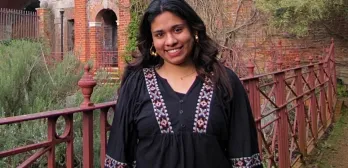
We’re delighted to announce that Shizuka Dara won the 2025 QS ImpACT Women’s Scholarship – a $5,000 USD award for a female student who plans to use their Masters studies to reduce inequality in a community. 

Shizuka used this award to undertake her master's in Computer Science at Rice University in the USA, which she began in August 2025. She will use this experience to develop responsible and scalable AI systems and develop an entrepreneurial mindset to create products that solve human problems. We spoke to her to find out more.

What does winning the scholarship mean to you?

The most significant part of this for me is recognition. It's easy to get lost in the work and question if you're doing the right thing. But receiving the scholarship feels like a vote of confidence, and it tells me that my efforts are seen and valued. It’s about the encouragement just as much as the funding.
How did you feel when you found out you had won?

I had to read the email twice! I was applying for several scholarships, but I wasn’t sure if I was going to hear back from any of them. There was a massive wave of relief and I was obviously excited.

It had been a stressful period of waiting for admission decisions and scholarship decisions, so getting that positive notification felt like a major turning point.

It instantly shifted my mindset from worrying about my degree to focusing entirely on how I was going to make the most of my opportunity.

How did you decide which university to go to?

I wanted to study in the US because it is the frontier of tech. I believe it is the hub of innovation, especially with respect to the current AI revolution. Being at the source of these developments offers a unique perspective.

I was looking at global rankings, but I was also investigating specific faculty and research groups. I ultimately chose Rice University because it had a unique combination of high academic rigour and a close-knit collaborative culture. And I was impressed by its unique resources, like the Lilie Lab which provides a bridge between CS background and the entrepreneurship ecosystem. 

Not only that, I spent a lot of time reading about the curriculum, and I realised it offered the blend of theoretical depth and real-world application I was looking for. I knew I wanted an environment where I could engage deeply with professors and peers.

In addition, I spoke to students who are already at Rice doing a master's in Computer Science by connecting over LinkedIn.

Which of the QS events did you attend?

I went to a QS event in Pune in India. Quite a few colleges came to the event, but I didn’t really go to look for the colleges because I had already been accepted by Rice. 

However it was still very nice to meet all the people and talk to them about the application process. I'm sure it would be very helpful for a lot of people who are still in the process.

How is the course going so far?

It has been an incredibly rewarding transition! The curriculum is as rigorous as I expected, but I’m finding the challenge very energising. 

What has surprised me most is the diversity of perspectives. I’m collaborating with peers who share my technical goals, but also those from entirely different backgrounds. Having that mix of ideas around me, especially in a collaborative environment like Rice, really pushes me to think about computer science in a more global context.


What are the best things about studying overseas?

I think everyone should experience studying abroad if they have the opportunity. It's not just about the academic side – it's about being in a new country and figuring out things for yourself, as that builds a level of self-trust you can’t develop any other way. You learn that you are capable of navigating the unknown.

What are your goals and how will this course help you reach them?

I’m majoring in computer science with a specialisation in machine learning or AI. In the long term, I aim to be at the intersection of AI innovation and product strategy. My goal is to lead teams that don't just optimise for accuracy, but for real-world utility. 

Rice’s rigorous CS curriculum is giving me that technical foundation. In an industry as volatile as AI, I am trying to have a ‘first-principles’ foundation that helps me navigate rapid shifts and have the agility to adapt, implement and lead through those changes. 

For now, I plan to finish education in the US and then work in the industry for at least two years. I want to take this global perspective and technical rigour back to India and contribute to the growing tech landscape there to solve, or help solve, problems uniquely relevant to the Indian market.

What advice would you give to other students who are researching universities?

I would say don’t just look at rankings, but also look at professors and research groups and check if they align with your own goals. And reach out to people who are already studying at the college they're applying to and ask about their experience. 

I connected with people at my target schools on LinkedIn. You would be surprised how many people are willing to help you and offer guidance.

What about advice regarding researching scholarships?

You have to stop filtering yourself out before you even apply because a lot of students – myself included – experience imposter syndrome. You think you're no better than the others and you’re not going to get it. Or your stories are not big enough to win. 

But I learned that scholarship committees are looking for authenticity and potential and not just a perfect resume. So don't be afraid to be vulnerable about your goals and your background. Have a clear vision for how you want your next few years to look, put it on paper and trust that your story has value.

  • Hayat Dawud
  • Melchy Madisa

saved this article

  • Hayat Dawud
  • Melchy Madisa

saved this article

Recommended Articles Last year